The Kindergarten Literacy System That Creates Independent Readers
Reduce student dependency, strengthen foundational literacy skills, and improve reading readiness before students ever need intervention.
The Hidden Cost
When students become dependent learners in kindergarten, districts often see:
✔ Increased Tier 2 and Tier 3 intervention placements
✔ Growing MTSS demands
✔ Higher remediation costs in later grades
✔ Classroom behavior challenges linked to academic frustration
✔ Third-grade reading scores that never fully recover
The issue isn't teacher effort.
It's a Tier 1 literacy system that unintentionally creates dependency instead of independence.
The Strategic Shift
Kindergarten is where districts decide:
Do students become independent learners?
Or do they become dependent learners (waiting for the teacher to do the work)?
Building Kindergarten Readers installs a campus-wide Tier 1 literacy infrastructure that
transfers responsibility from teacher prompting to student independence.
while using a proven, robust literacy resource and system where independence and literacy become observable — not aspirational.
What Administrators Can Expect to See Within 90 Days
Students:
- Initiate tasks without waiting for teacher prompting
- Use classroom literacy supports independently
- Reread to verify accuracy
- Produce readable phonetic writing
- Explain their thinking while reading
Teachers:
- Spend less time rescuing students
- Increase productive literacy engagement
- Create more consistent Tier 1 instruction
Campuses:
- Establish common literacy practices
- Build consistency across kindergarten classrooms
- Strengthen the foundation for future reading success
WHY?
BKR's shared reading formula drives cognitive work — not passive engagement.
Contact Us to Learn MoreThe Campus Implementation Framework
This is not a one-day training.
It is a structured Tier 1 installation across four phases:
Phase 1 — Build the Print Foundation
Automatic letter-sound knowledge and consistent shared print routines.
Phase 2 — Install the Interactive Shared Reading System
Shift cognitive responsibility from teacher performance to student problem-solving.
Phase 3 — Writing to Build Reading
Make transfer visible through phonetic writing and structured attempts.
Phase 4 — Expand Word Knowledge & Independence
Develop flexible word-solving across increasingly complex texts.
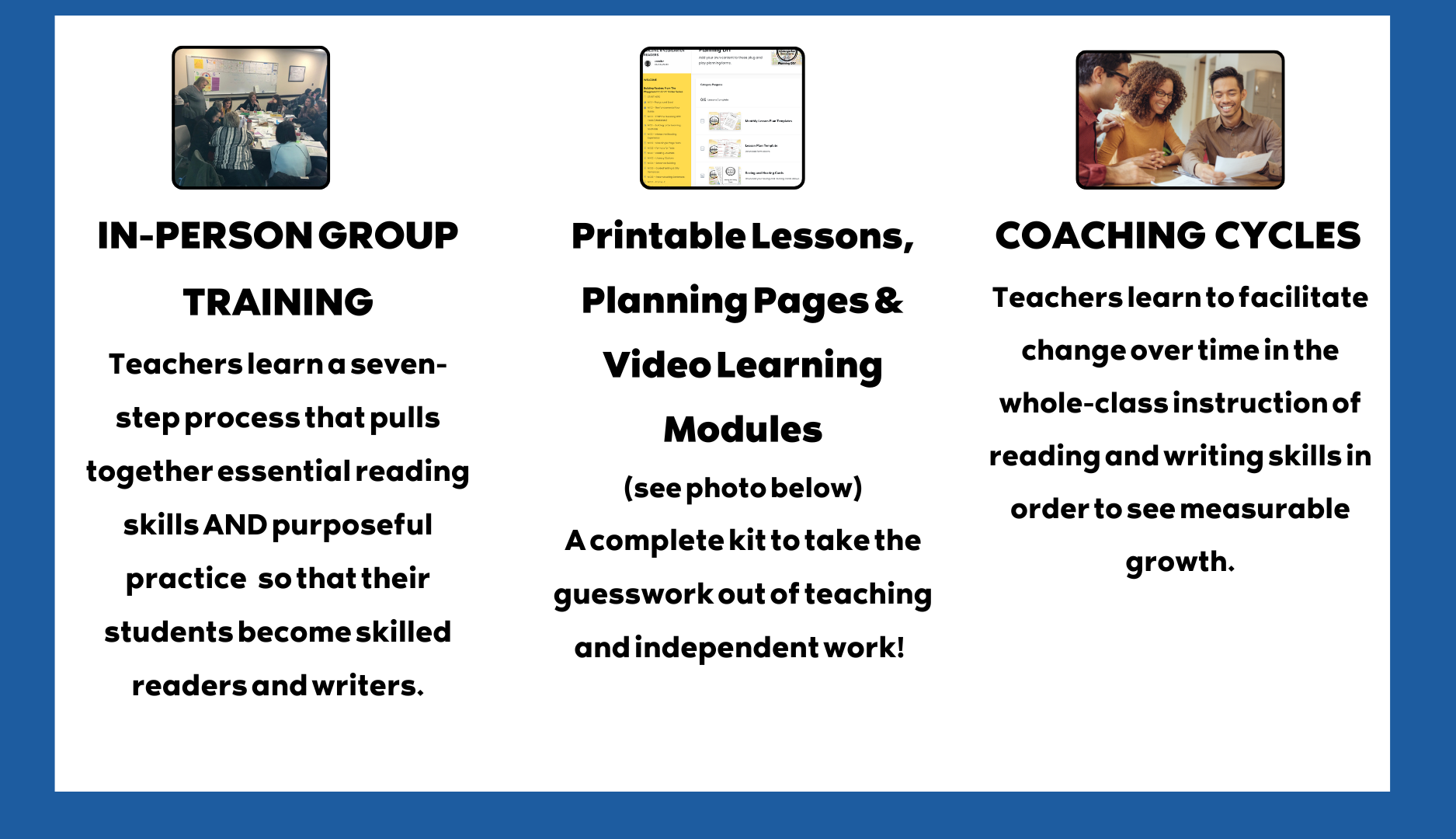
Each phase includes:
• Professional learning
• In-class modeling
• Coaching cycles
• Leadership alignment
• Clear independence look-fors
Consistency across classrooms is non-negotiable.
Contact Us to Learn MoreDistrict Impact
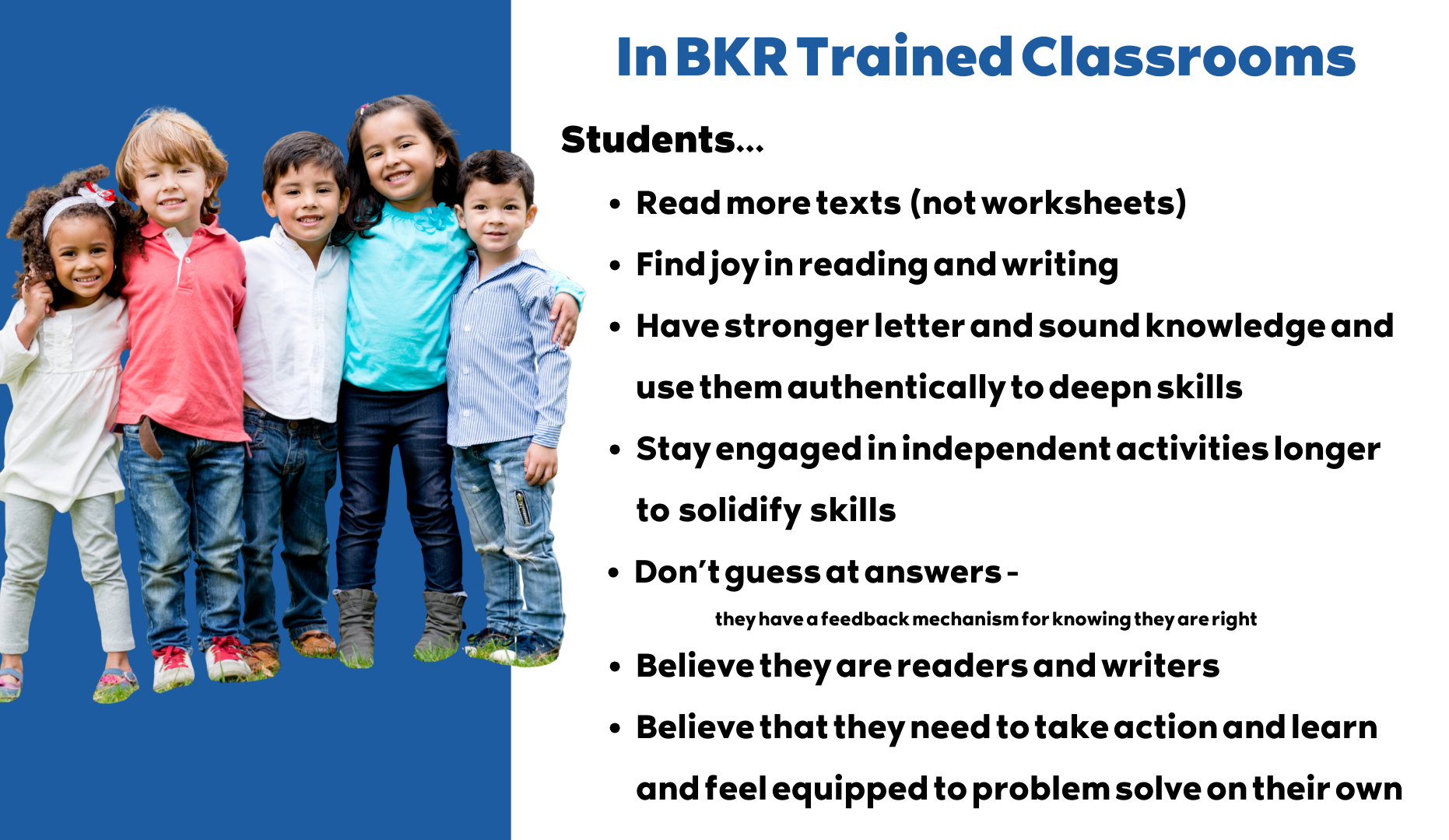
When every kindergartener can read and problem solve on their own:
• First-grade intervention referrals decrease because students are on grade level
• Behaviors decrease because students are engaged of their learning
• Classroom practices align campus-wide
• Students enter first grade ready to read at higher levels
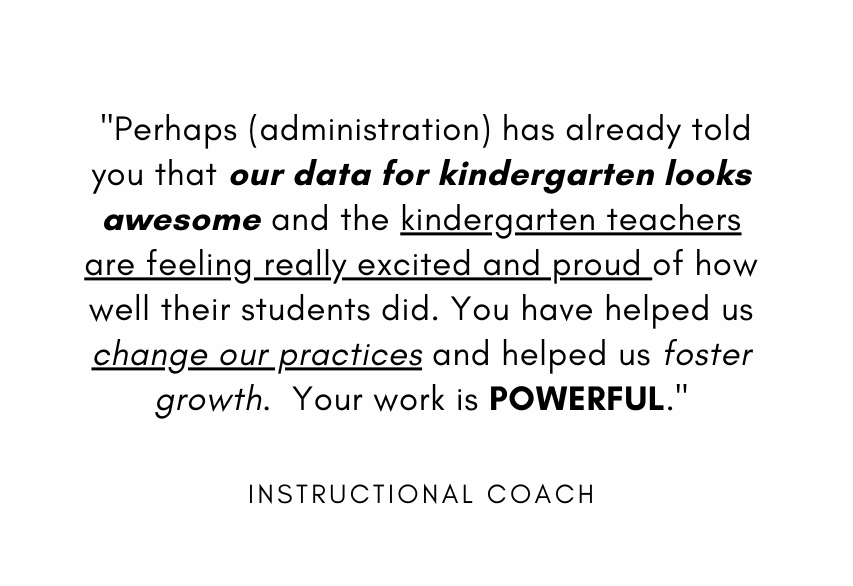
• The trajectory of reading success across the building soars
Whole class systems and strong tier 1 instruction around literacy prevents problems before they require intervention.